Hey there, fellow solar nerds and project managers, Solar DC Cables
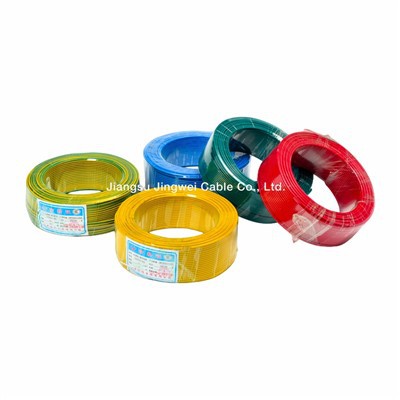
If you’ve ever crouched on a roof at 7 a.m. (blame the sunrise, not the coffee) stringing together solar panels, you’ve probably stared at those thick, black DC cables thinking, “Are these just heavy-duty wires, or is there more going on here?” As a solar DC cables supplier, I talk to installers and EPCs all the time who skip over the “inductance” part—until something goes wonky. Today, let’s break this down like we’re geeking out over our favorite solar gear, no stuffy textbook jargon.
First, let’s get real about what inductance even is, but make it relatable. You know how when you plug a big power tool into an extension cord, sometimes the lights flicker for a split second? Or how if you pull a plug really fast, you get that tiny zap? That’s inductance at work—it’s a wire’s (or cable’s) superpower to store energy in a magnetic field when electricity flows through it. Every single conductor has inductance, even the tiny jumper wires on your inverter. But solar DC cables? They’re not tiny jumpers—they’re long, heavy-duty runs that snake across roofs, through conduits, and sometimes for hundreds of feet from panels to inverters. So their inductance isn’t just a trivial detail—it can actually mess with your system’s performance if you ignore it.
Now, let’s talk numbers, because that’s what everyone actually cares about, right? Inductance for a single DC cable (that’s just one conductor, like the positive or negative run) is usually measured in microhenries per foot (µH/ft). For standard solar DC cables—think the 10AWG or 12AWG stuff we supply most of the time—that number hovers around 0.05 µH/ft to 0.1 µH/ft. Wait, that’s tiny, right? But hold on—when you add up the length, that’s where it adds up fast. Let’s say you have a big commercial system with a 500-foot cable run between the array and the inverter. 500 feet times 0.075 µH/ft (that’s our sweet spot for 10AWG) is 37.5 µH total inductance. For a residential system with a 50-foot run? That’s 3.75 µH—still small, but not zero.
But here’s the twist: solar DC systems use two cables, right? Positive and negative, running side by side in a conduit or even twisted together. When they’re carrying current in opposite directions, their magnetic fields cancel out a lot of each other. That means the total inductance of that two-cable setup is way lower than two single cables would be. So when we’re quoting for jobs, we always mention that twisted-pair or paired runs cut inductance by like 60% or more—something a lot of new installers don’t know to ask for.
Now, why should you care about this as an installer or project owner? Let’s get into the real-world impacts, not just theory. First, there’s switching noise. Your inverter’s MPPT (Maximum Power Point Tracking) controller is switching DC current on and off thousands of times a second to feed power to the grid. That rapid current change slams into the cable’s inductance, creating voltage spikes. If those spikes are too high, they can damage sensitive electronics—like the inverter’s internal circuits, or even the microinverters on each panel. We’ve had clients come to us with inverter failure that traced back to undersized cables with too high inductance for long runs, so that’s not a hypothetical.
Second, there’s power loss at high frequencies. Wait, DC is supposed to be steady, right? Yeah, but the switching action from the inverter adds AC ripple to the DC current. Inductance opposes changes in current, so that ripple doesn’t flow as easily through a high-inductance cable. That means more power wasted as heat, which is less energy going to your bottom line. For a big commercial array, that adds up to thousands of dollars in lost production over the system’s lifespan.
But wait—don’t go running to swap all your cables yet. Inductance isn’t the only factor, and it’s way less of a problem than resistance (that’s the voltage drop you hear about all the time). Inductance only becomes a big deal when runs are super long, or when you’re dealing with high-frequency switching (like in string inverters with fast MPPT). For residential systems with short runs, inductance is barely a blip. The key is balancing all the cable specs: gauge, length, paired vs. single, and inductance, instead of just grabbing the cheapest cable you can find.
Let’s talk about how we design our solar DC cables to handle inductance, because that’s what we do here. First, we use solid-core conductors? No, wait—stranded, but with careful layering. We use high-purity copper, because copper has lower inductance than aluminum (even though aluminum is cheaper, we don’t supply aluminum DC cables for that exact reason plus higher resistance). The insulation is also a factor—thicker insulation between the positive and negative conductors reduces the magnetic coupling between them, so their fields cancel less? Wait, no—wait, let’s get that right. Wait, when two conductors are closer together, their magnetic fields interact more, so the total inductance of the pair is lower. Oh right! So we space them just right, or if we use twisted pairs, we twist them at a consistent pitch to keep that cancellation uniform. We test every batch of cables for inductance using a precision LCR meter, because we need to make sure they hit that 0.05-0.1 µH/ft sweet spot for 10AWG, no exceptions. If a cable comes out with higher inductance than that, we scrap it—simple as that.
Another question I get all the time: can inductance cause voltage drop? Wait, standard DC voltage drop is from resistance, but inductive voltage drop is real, especially at high frequencies. The formula is V_drop_inductive = 2πfLI, where f is the frequency of the ripple current, L is inductance, and I is current. For a residential system, f is usually low—like a few kHz—so that drop is negligible, like a few millivolts. But for a commercial system with a 500-foot run and a 10kHz ripple, that could add up to a few volts. Still less than resistive voltage drop, but it’s something to keep an eye on.
Let me throw in a real example from last year to make this concrete. We worked with an EPC on a 1MW commercial array in Arizona. They initially spec’d 10AWG single runs for the 450-foot array-to-inverter cables. Their first test run showed a 2% power loss from inductive ripple alone, on top of 1.5% resistive loss. They came to us, we swapped them for our paired twisted-pair 10AWG cables, and the inductive drop dropped to 0.3%—total system loss went down to 1.8%, which was a $12,000 annual gain for them. That’s not chump change, right? That’s why getting this right matters.
Now, let’s bust a common myth: some people think that bigger gauge cables have higher inductance. Nope—actually, thicker gauge (lower AWG number) cables have lower inductance, because they have more copper, so the magnetic field is more spread out, and paired runs cancel even more. That’s why we recommend 10AWG for long runs instead of 12AWG, not just for resistance, but for inductance too.
So what do you need to remember when picking solar DC cables? Let’s make a quick cheat sheet:
- For runs under 100 feet: Inductance is basically irrelevant. Focus on gauge for resistance, and make sure the cable is UV-rated.
- For runs 100-300 feet: Go with paired positive/negative cables to cut inductance, stick to 10AWG minimum.
- For runs over 300 feet: Talk to us! We can spec custom low-inductance cable runs, maybe even larger gauge if needed, to keep ripple noise low and protect your inverter.
And as your go-to solar DC cables supplier, we don’t just send you a box of wires and walk away. We include a spec sheet for every order that lists the exact inductance rating for the cable, plus recommendations for run lengths and configurations. We also do free technical calls for every project over 50kW—no hoops to jump through, just us geeking out over your system to make sure it runs as smooth as possible.
At the end of the day, inductance isn’t the sexiest part of solar cable specs, but it’s one of those small details that can make a big difference in system performance and longevity. Skip the cheap, untested cables with vague specs, and work with a supplier that knows their stuff when it comes to inductance, resistance, and all the other fine print.
If you’re planning a new install, replacing old cables, or just have questions about how inductance will affect your specific system, hit us up for a procurement chat. We’ll walk through your run lengths, panel counts, and inverter models to make sure you get the right cables at the right price, no hidden fees or confusing jargon.
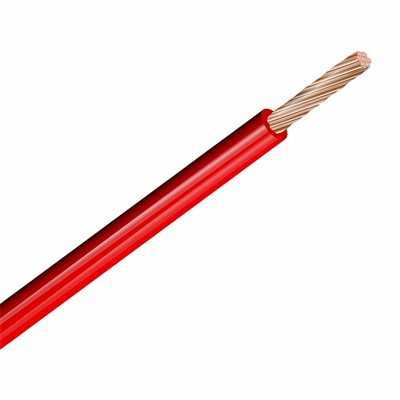
Thanks for sticking with me through this deep dive—now go out there and wire some solar like a pro.
Solar DC Cables References:
- Renewable Energy World, “DC Cable Inductance and Its Impact on PV System Performance”
- NEC 2023, Article 690 (Solar Photovoltaic Systems) Conductor Specifications
- IEEE Journal of Photovoltaics, “Loss Characterization of Long-Distance DC Cables in Utility-Scale Solar Arrays”
- Solar Power World Technical Guide, “Sizing PV Cables for Inductive and Resistive Losses”
Jiangsu Jingwei Cable Co., Ltd.
As one of the leading solar dc cables manufacturers in China, we warmly welcome you to buy bulk durable solar dc cables made in China here from our factory. All cables are with high quality and competitive price. For pricelist and free sample, contact us now.
Address: Industrial Concentration Zone C, Guanlin Town,Yixing City, Jiangsu Province
E-mail: marilyn.wang@jingwei-cable.com
WebSite: https://www.jwcable.com/
