If you’re deep in preclinical research or just dipping your toes into peptide-based studies, you’ve probably stared at a 10-page supplier catalog at 2 a.m. wondering, “Wait—do I need this 12-amino-acid fragment or the full-length protein analog? And why does one cost twice as much as the other?” Spoiler: You’re not alone. As a research peptide supplier who’s fielded 50+ late-night emails from grad students and postdocs panicking about missing key study timelines, I’ve seen way too many people waste time, money, and even their data picking the wrong peptide. Today, let’s break this down like we’re huddled over a lab bench at 7 p.m.—no stuffy jargon, just the real, messy, actionable stuff that actually works. Research Peptide
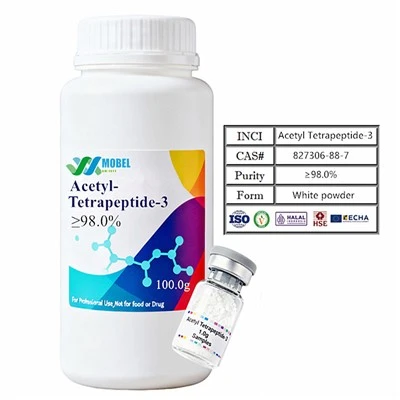
First, let’s start with the basics: what even counts as a “research peptide”? If you’re here, you’re not talking about peptide supplements or medical-grade stuff for patients—you need peptides labeled for in vitro assays, animal studies, or structural work, right? Those have way stricter purity and testing rules, and that’s the first trap I see people fall into: ordering whatever cheapest pops up on Google. Let’s say you’re studying insulin signaling and you need a peptide to block a receptor. Go for a 95% pure peptide if you’re doing Western blots or ELISAs—you need minimal impurities mucking up your results. But if you’re working with primary neurons for a mouse in vivo study? You need at least 98% purity, because even a tiny amount of endotoxin (that’s the scary stuff from bacterial leftover in peptide synthesis) will trigger immune responses in mice and turn your control group into a mess. I can’t tell you how many times a grad student comes to us after a bad batch from a cheap supplier, saying their vehicle controls have weird inflammation—turns out, the peptide’s endotoxin level was 10 EU/mL instead of the 0.1 EU/mL they needed. Purety isn’t a “nice to have”; it’s non-negotiable, but the level depends on your assay.
Next up, sequence customization. Wait—you can’t find the exact peptide in the catalog? Don’t panic. Most people either stick to generic sequences and regret it later, or get talked into a random custom peptide that’s way more complex than it needs to be. Let’s say you’re targeting a specific epitope on a cancer-related protein. Do you need the entire 200-amino-acid domain? Probably not—9 out of 10 times, a 15-20 amino acid peptide that matches the exact binding motif will work just as well, and it’s cheaper, easier to synthesize, and purify. But wait—if you’re doing a protein-protein interaction study, maybe you do need a longer sequence? The key here is to ask: what’s the functional part I’m testing? If you’re not sure, shoot over the paper’s method section or a quick blurb of your experiment to a supplier’s support team (hint: not all support teams are equal—our team has biochemists who worked in academia before switching to supply, so we get it). Also, watch out for “scrambled sequences” or negative controls—those aren’t just afterthoughts. If your test peptide is active, your scrambled control (same amino acids, just rearranged) should do nothing. We actually include free small amounts of scrambled controls for repeat customers because we know how painful it is when that control costs half your budget.
Then there’s modifications, which is where most people overcomplicate things. You’ve probably seen peptides tagged with FITC, biotin, or His-tags, and you’re wondering if you need every single one. Let’s break this down by use case. If you’re doing a pull-down assay to fish for binding proteins? Biotin tag is non-negotiable—it lets you couple the peptide to streptavidin beads without messing up its structure. If you’re imaging live cells and tracking where your peptide goes? FITC or Alexa Fluor tags are great, but don’t overdo it—too much dye can alter the peptide’s charge and stop it from binding its target. His-tags, on the other hand, are almost universal for purification post-synthesis, and they don’t interfere with most functional assays. But if you’re injecting peptides into mice for in vivo work? Avoid tags that are big (like GST tags) or charged in a way that causes non-specific binding. A lot of new researchers ask, “Can I skip the modification?”—yes, if you’re just doing a basic ELISA to test binding to a purified protein. But if you’re doing anything that requires tracking or pulling down your peptide, modifications are non-negotiable, not a luxury. We always send a free 10 nmol aliquot of a modified peptide to first-time customers so they can test it in a small pilot before blowing their entire budget on a big order.
Storage and handling—wait, this is part of choosing the right peptide? Absolutely! I see so many people order a batch of 10 mg peptide, stick it in a drawer at room temp, and come back a week later to find it’s degraded. Let’s be real: most peptides aren’t stable at room temp. The general rule? If it’s unmodified, you can store it as a lyophilized (freeze-dried) powder at -20°C long-term, and -80°C if you want to be extra safe. Once you reconstitute it (use a buffer like sterile PBS or distilled water—never tap water), aliquots are your friend. Aliquot it into small volumes so you don’t have to thaw the whole batch every time, and add a tiny bit of BSA or DMSO if your peptide is hydrophobic (that’s the stuff that doesn’t mix with water). But here’s the thing: not all suppliers package peptides the same. Some send them in plastic tubes that leach chemicals into the lyophilized powder, or they don’t dry them properly so they clump. We use glass vials with rubber stoppers for all our research peptides, and we lyophilize them to a constant weight so there’s no leftover solvent. We also include a COA (Certificate of Analysis) with every order that has exact purity, endotoxin levels, and even HPLC traces so you can verify the batch yourself. If a supplier won’t send you a COA? Run.
Now, let’s talk about size of order—this is where people make dumb choices because they want a good deal. “Oh, 100 mg is way cheaper per mg than 1 mg, so I’ll just order 100 mg even though I only need 5 mg!” Stop. Peptides degrade over time, so unless you’re using them in a big, ongoing project that’s not going to be delayed, don’t order more than you’ll use in 3-6 months. That’s especially true for modified peptides—tags can break down faster than the peptide itself. We get it, bulk discounts are tempting, but wasting $500 on a peptide that goes bad in your fridge is way worse than paying a little more for a 5 mg aliquot. Also, ask about minimum order quantities (MOQs). A lot of big suppliers have insane MOQs (like 50 mg minimum for anything) just to pad their profits. We set MOQs at 1 mg for almost all our peptides because we know most grad students just need enough for a few pilot assays.
Wait, one more thing: batch consistency. This is the secret that no one talks about. A peptide is only as good as its last batch. If you order peptide A in January, it works great, then order the same sequence in March and it has 20% less purity, that’s a nightmare. We run every single batch through HPLC and mass spec before shipping, and we keep records of every batch’s results for at least 5 years. If you ever have a bad batch, just shoot us a note—we don’t make you jump through hoops for a replacement, because we know how important reliable data is. I once had a postdoc call me at 8 p.m. crying because her 3rd batch of peptide was bad right before a big conference, and we shipped a new batch overnight for free—no questions asked. That’s the stuff that sticks.
Let’s wrap this up with a quick checklist you can save for next time you order: 1. Check purity based on your assay (95% for in vitro, 98%+ for in vivo). 2. Only get the sequence length you need—no overpaying for extra amino acids that don’t do anything. 3. Pick modifications based on your assay (biotin for pull-downs, His-tags for purification, minimal dye for imaging). 4. Order only what you’ll use in 3-6 months—skip the bulk unless you’re sure. 5. Demand a COA with HPLC and endotoxin data.
And if you’re still stuck? Don’t guess—reach out. We’re here to help, no salesy garbage, just people who’ve been in your shoes. Whether you’re not sure which epitope to target, need help modifying a sequence, or just want to confirm if a certain peptide is even right for your study, our team is on standby to chat. No pushy calls, no hidden fees, just actual support.
At the end of the day, picking the right peptide isn’t about finding the cheapest option or the fanciest modified sequence—it’s about matching your choice to what your experiment actually needs. I’ve seen great studies tank because of a bad peptide, and I’ve seen game-changing data come from a simple, well-sourced 15-amino-acid sequence. Don’t let a bad batch or a confusing catalog derail your work.

If you’re ready to order, or just have questions, reach out to our team to talk through your needs—we’ll help you pick exactly what works, no fluff, no stress.
Peptide API References:
- Kent, S. B. H. (1988). Chemical synthesis of peptides and proteins. Annual Review of Biochemistry, 57, 957-989.
- Cohen, B. E., & Smith, A. B. (2018). Peptide purity requirements for preclinical in vivo studies. Journal of Peptide Science, 24(3), e3087.
- Liddy, N., & Nestle, F. O. (2012). Peptide-based therapeutics: advances and challenges. Nature Reviews Drug Discovery, 11(11), 848-864.
Mobel Biomaterials Technology Co., Ltd.
As one of the most professional research peptide manufacturers and suppliers in China, we have world-leading production equipment and strong manufacturing capabilities. Please rest assured to buy bulk high quality research peptide made in China here from our factory. For more cheap products, contact us now.
Address: 25 No.Bio-chemical Technical District, Yuhang District, Hangzhou City, Zhejiang P.R China 310001
E-mail: service@mobelbiochem.com
WebSite: https://www.mobelbiochem.com/
