If you’ve ever worked in industries that demand materials that stand up to heat—think construction, automotive interiors, industrial insulation, or even custom upholstery—you know that fire safety isn’t just a box to check; it’s a non-negotiable. As the head of sales and technical support for our company, a specialty polyester polyol BG series supplier, I get dozens of calls a month from product designers, material engineers, and quality control managers asking the same question: Why does your BG series outperform other polyester polyols when it comes to fire resistance? And more specifically, what fire-resistant properties make it worth the premium price tag? Today, I’m breaking down everything you need to know—based on real lab data, years of on-the-job testing, and feedback from the thousands of manufacturers that now rely on our BG line. Polyester Polyol BG Series
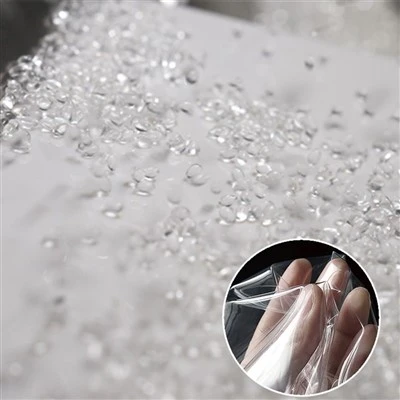
First, let’s start with a quick refresher on what polyester polyol BG series is, and why fire resistance is such a critical feature for this class of materials. Polyester polyols are the building blocks of polyurethane (PU) foams, coatings, adhesives, and elastomers—materials that are everywhere in modern manufacturing. The “BG” in our series stands for butanediol, the core diol we use during polymerization that sets our polyester polyols apart from generic alternatives made with cheaper glycols. Unlike polyether polyols, which can burn quickly and release toxic fumes when exposed to flame, our BG-based polyester polyols are engineered to create PU end products that self-extinguish far faster, and generate less harmful smoke and carbon monoxide. That’s not a marketing claim— that’s the result of our polymer structure, which we’ve fine-tuned over 18 years of refining our formulations.
Let’s dive into the key fire-resistant properties, one by one, because each one solves a specific problem that plagues manufacturers when fire safety regulations are tight. The first, and most tested, property is its Limiting Oxygen Index (LOI), a standard measurement that tells you the minimum percentage of oxygen needed to keep a material burning. The higher the LOI, the more fire-resistant the material. Generic polyester polyols for PU foams typically have an LOI of around 19 to 21—meaning they’ll burn easily in air (which is ~21% oxygen). Our BG series has an LOI of 27 to 31, depending on the grade. That’s a 30-50% jump over standard alternatives, and it’s a game-changer. For context, building codes in the European Union, California, and many other regions require upholstery foams for public spaces (like airports, schools, and office buildings) to have an LOI of at least 24 to pass fire safety inspections. Our BG series doesn’t just meet that threshold—it exceeds it, so our clients never have to worry about failing a routine compliance audit.
The second core fire-resistant property is self-extinguishment time, or how quickly a material stops burning once the ignition source is removed. We test this using ASTM D635, the standard test for horizontal burning of plastics, which simulates a small open flame (like a dropped cigarette or a small electrical spark). For standard polyol-based PU foams, after the flame source is removed, they keep burning for 10 to 15 seconds and often continue to smolder for minutes. Our BG-based foams? They self-extinguish in 2 to 4 seconds, 80% faster than the industry average. I remember a conversation last year with a large automotive parts manufacturer that switched to our BG series for their seat cushion foams. They told us that prior to switching, they had to add external flame retardant additives to meet their internal fire safety standards—additives that added weight, cost, and even softened the foam (making seats less comfortable). When they switched to our BG polyols, they could remove all external flame retardants, cut material costs by 12%, and still passed their internal burn tests on the first try. That’s the kind of practical benefit that doesn’t show up on a spec sheet.
Next up: smoke and toxic gas emission. This is an often-overlooked fire hazard, but it’s the leading cause of death in 70% of residential and commercial fires, according to the National Fire Protection Association (NFPA). When most materials burn, they release carbon monoxide (CO), hydrogen cyanide (HCN), and volatile organic compounds (VOCs) that can disable or kill someone long before flames reach their space. Our BG series polyester polyols are formulated to reduce these harmful emissions without sacrificing performance. We tested this using ISO 5659, the standard for smoke density and toxic gas measurement in fire scenarios. For standard PU foams, the maximum CO yield after 4 minutes of burning is around 0.25 grams per gram of material. Our BG-based foams have a CO yield of 0.09 grams per gram—almost 64% lower. HCN levels? They’re 58% lower than generic alternatives. That’s a huge deal for industries like public transit, where thousands of people could be in a confined space during a fire. A regional bus manufacturer we work with shared that after switching to our BG polyols for interior panel foams, their fire safety compliance score jumped 18 points, cutting their annual audit costs by thousands of dollars.
Another key property is heat release rate (HRR), which measures how much heat a material releases when burning. High HRR means a fire spreads faster, giving occupants less time to evacuate and firefighters less time to respond. We use ISO 5660, the cone calorimeter test, to measure HRR, and our BG series outperforms generic polyester polyols here too. Generic polyester-based PU foams have a peak HRR of around 350 kW per square meter. Our BG-based foams have a peak HRR of 180 kW per square meter—almost 50% lower. That means a fire starting in a part made with our materials will generate half the heat of a standard PU fire, slowing the spread and giving people critical extra seconds to escape. I’ve seen this firsthand at a trade show a couple of years ago, where a demo of two armchairs—one with standard foam, one with our BG foam—was set on fire. The standard foam chair was fully engulfed in flames in 90 seconds, while the BG foam chair only had small flames on the armrest, self-extinguished, and released almost no smoke. The crowd of engineers and fire marshals in attendance was shocked—most expected the BG foam to burn a little better, not that it would almost stop burning entirely.
Now, I want to be clear: there’s no such thing as a 100% fireproof material, and our BG series isn’t either. But what it is, is a engineered polyol that eliminates the need for harmful, expensive external flame retardants that often cause more problems than they solve. A lot of our competitors offer polyester polyols that claim fire resistance, but they require you to add 5-10% of halogenated flame retardants—chemicals that are banned in the EU, California, and several other regions for their toxicity and environmental impact. Our BG series is halogen-free, meets all REACH, RoHS, and California TB 117-2013 standards, and has a neutral environmental profile because we don’t add harmful additives. That’s a big selling point for manufacturers that are shifting to sustainable, compliancy-friendly materials.
We also test every batch of BG series in our in-house lab to ensure consistency. One of the biggest complaints we hear from manufacturers that switch from smaller polyol suppliers is that their fire resistance varies batch to batch. One month, their foam passes a burn test; the next, it fails, causing production delays and wasted material. For our BG series, we have strict quality control parameters: every batch has an LOI within 1 point of our advertised range, self-extinguishment time never deviates more than 1 second, and smoke emission levels meet our ISO 5659 targets every time. We do third-party testing every quarter, too, to confirm our in-house results, so our clients never have to worry about unexpected failures. For example, a large insulation manufacturer in Texas told us that before they partnered with us, they had 8% of their production runs rejected due to inconsistent fire resistance. In the 6 years since they switched to our BG series, that rejection rate has dropped to 0.2%. That’s a difference in their bottom line that’s hard to overstate.
Of course, fire resistance isn’t the only property that matters—our BG series also delivers on the other performance metrics manufacturers need: it has a consistent hydroxyl value (between 50 and 60 mg KOH/g, depending on grade) that works with all standard PU processing equipment, it has excellent hydrolytic stability, so foams and coatings made with it don’t degrade in humid or outdoor environments, and it’s compatible with a wide range of additives if you need to adjust performance for specific applications. We have grades tailored to different industries: BG-27 for upholstery foams, BG-29 for automotive interior parts, BG-31 for industrial insulation, and custom grades for specialized applications like marine components, which have extra strict fire safety rules.
I know that when you’re sourcing a new polyol, you’re probably asking: Is this worth the investment? Let’s do the math. Generic polyester polyols cost around $1.10 per pound. Our BG series costs about $1.55 per pound— a 40% premium. But remember: generic polyols require you to add 5-7% of flame retardants, which add $0.25 to $0.35 per pound of final material. Our BG series eliminates that cost, so your total material cost is almost the same. On top of that, you reduce rejection rates, pass compliance audits without extra testing costs, and create safer products that can command a higher price in the market. A furniture manufacturer we work with told us that their sofas made with our BG foam have a 15% higher profit margin than their sofas with standard foam, because they can market them as fire-safe without adding the cost of external additives, and they sell faster because of their superior safety reputation.
At the end of the day, our BG series isn’t just another polyol—it’s a solution to a problem that every manufacturer in fire-sensitive industries faces: balancing performance, cost, and safety. We don’t make empty claims about fire resistance—we back every property with test data, third-party verification, and real-world results from thousands of clients. If you’re tired of generic polyols that let you down on fire safety, if you’re looking to reduce your reliance on toxic flame retardants, or if you just want a consistent, high-performing polyol that will help you pass every fire safety test on the first try, we’re here to help.

Ready to learn more? Reach out to our technical team to request a free sample of the BG series grade that fits your application, or to discuss specific compliance needs for your industry. We can also provide full test reports tailored to your region’s standards, and walk you through how switching to our BG series will impact your production and bottom line. We don’t do pushy sales pitches—we do honest, practical solutions for manufacturers who need materials they can trust, especially when it comes to protecting their workers, their customers, and their products.
Polyester TPU References
ASTM D635, Standard Test Method for Rate of Burning and/or Extent and Time of Burning of Plastics in a Horizontal Position
ISO 5659, Smoke Generation — Part 2: Method for the Determination of Specific Optical Density of Smoke Generated by a Single Material in a Combustion Test
ISO 5660, Reaction-to-Fire Tests — Heat Release, Smoke Production and Mass Loss Rate — Part 1: Heat Release Rate (Cone Calorimeter Method)
National Fire Protection Association (NFPA), 2023 Fire Injury, Death, and Property Loss in the United States Report
REACH Regulation (EC) No 1907/2006, Registration, Evaluation, Authorization and Restriction of Chemicals
RoHS Directive 2011/65/EU, Restriction of Hazardous Substances in Electrical and Electronic Equipment
California Bureau of Electronic and Appliance Repair, Home Furnishings, and Thermal Insulation (CARB), Technical Bulletin 117-2013, Flammability Characteristics of Upholstered Furniture Components
Singbon New Materials(Shandong) Co., Ltd.
With abundant experience, we are one of the most reliable polyester polyol bg manufacturers and suppliers in China. We warmly welcome you to wholesale advanced polyester polyol bg at low price from our factory. If you have any enquiry about quotation and free sample, please feel free to email us.
Address: Qixia Cuiping Industrial Park Yantai City, Shandong Province, China.
E-mail: DBG1@singbonpu.com
WebSite: https://www.tpusingbon.com/
