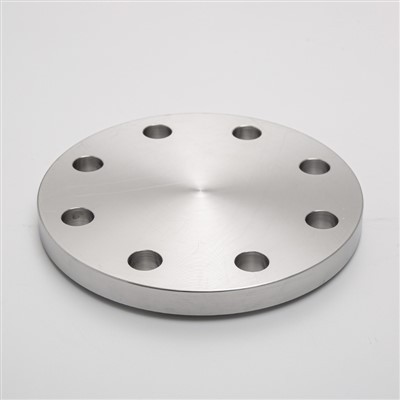
If you’re in the market for stainless steel flanges, you’ve probably heard the term “bolt pattern” thrown around more times than you care to count—especially if you’ve ever dealt with a misaligned or ill-fitting flange. Let’s cut through the jargon, break this down like we’re chatting over a cup of coffee, and clear up everything you need to know about the bolt pattern for these super common, tough-as-nails flanges. As a stainless steel flange supplier who’s been in this game for years, I’ve seen firsthand how messing up a bolt pattern can turn a smooth installation into a total headache, so I’m gonna keep this real and skip the stuffy engineering textbook fluff. Stainless Steel Flange

First off, let’s start with the basics: what even is a bolt pattern, anyway? In plain terms, it’s the layout of the holes drilled through the face of a flange that bolts it to another flange, a pipe, or some other component. It’s not just “how many holes there are”—it’s also the diameter of the circle those holes sit on, the size of each hole, and the spacing between holes. All these specs have to match exactly for the flange to fit properly. If even one thing’s off—say, you grab a flange with a 4-hole 4-inch circle bolt pattern for a line that needs an 8-hole 6-inch circle—it won’t line up, you’ll strip threads or crack the flange, and worse, you’ll end up with leaks that cost you downtime or cash. That’s why getting the bolt pattern right is non-negotiable, especially with stainless steel, which is used in everything from food processing to oil and gas where leaks aren’t just annoying—they’re risky.
Now, let’s talk about why stainless steel flanges have such specific bolt patterns in the first place. Unlike carbon steel, which might stretch or shift a little under pressure, stainless steel holds its shape way better, so its bolt patterns are standardized to match the exact pressure and size ratings of the piping system. That standardization is key here—if every manufacturer made up their own bolt pattern, you’d never mix and match flanges from different suppliers without a fight. Most of the time, we follow two big sets of standards: ASME B16.5 and ASME B16.47. These aren’t just random numbers—they’re set by the American Society of Mechanical Engineers, so every reliable stainless steel flange supplier sticks to these to keep compatibility across the board. I can’t tell you how many times a customer came to us because they bought a cheap flange from a random brand that didn’t fit their existing pipe, and it was all because that brand ignored the ASME specs.
Let’s dive into ASME B16.5 first, since that’s the one most folks deal with for low-to-medium pressure piping. This standard covers flanges up to NPS 24 (that’s nominal pipe size, for the uninitiated) and pressure ratings from 150 to 2500 psi. For example, a 150-pound (that’s 150 psi, basically) 4-inch stainless steel weld-neck flange has a specific bolt pattern: 8 holes, drilled on a bolt circle diameter (BCD) of 8 inches, each hole about 7/8 of an inch wide. Wait, why 8 holes? Because the 4-inch pipe needs evenly spaced bolts to distribute pressure evenly. If you go up to a 150-pound 8-inch flange, the bolt pattern jumps to 8 holes on a 10-inch BCD, right? No extra holes there, because the 8-inch pipe can handle the pressure with that layout. For higher pressure, say 300 pounds, a 4-inch flange will have more holes—10, actually—because higher pressure needs more bolts to clamp the joint tight. That’s the trick: higher pressure = more bolts, larger BCD to fit those bolts without crowding the flange face.
Then there’s ASME B16.47, which is for larger flanges, usually NPS 26 up to 60, and higher pressure ratings (like 150, 300, and 450 psi). These are the heavy-duty ones used in big industrial pipelines, refineries, or power plants. For example, a B16.47 26-inch 150-pound stainless steel flange has a bolt pattern with 12 holes on a 29-inch BCD—way bigger than the B16.5’s 8-inch for the smaller 4-inch flange, but that makes sense when you’re dealing with a 26-inch pipe that’s carrying way more volume. The key difference here is B16.47 uses larger, thicker flanges for bigger systems, so their bolt patterns are built to handle way more stress. I always make sure to ask customers if they’re working with B16.5 or B16.47 because mixing those up is another common mistake—someone might grab a B16.5 flange for a B16.47 line, and it won’t line up at all.
Now, let’s get into the little details that trip people up. First, hole size: the bolt pattern’s hole diameter isn’t just a random number. You have to match it to the bolt size you’re using. For example, a 7/8-inch hole pairs with a 3/4-inch bolt—there’s a little gap to make sure you can slide the bolt through without forcing it, which helps with alignment. If the hole is too small, you’ll struggle to get bolts in, and if it’s too big, the bolts won’t clamp tight enough, leading to leaks. Also, bolt spacing: the distance between two adjacent holes (called “bolt spacing”) has to be even enough so the load is distributed evenly. That’s why you never have two holes next to each other way closer than the others—stainless steel flanges are strong, but uneven stress can cause cracks over time, especially in high-pressure systems.
Another thing that’s often overlooked: flange type. Wait, how does flange type tie into bolt pattern? Let’s see: weld-neck flanges (the most common heavy-duty one), slip-on flanges, blind flanges (the ones that cap off a line), all have different bolt patterns even for the same size and pressure. A 150-pound 4-inch stainless steel slip-on flange, for example, might have the same number of holes and BCD as a weld-neck, but wait—no, not always. Some slip-on flanges have slightly smaller hole diameters because they’re thinner, so the hole has to be smaller to keep the flange rigid. That’s why it’s not enough to just say “I need a 4-inch 150-pound flange”—you have to specify the type too, otherwise the bolt pattern might not match. I’ve had a customer show up with a blind flange that had the same size as their pipe but wrong bolt holes because they didn’t tell us it was a blind flange, and we sent the wrong one. Oops.
Now, let’s talk about common mistakes I see with bolt patterns, because these are avoidable. First, assuming all stainless steel flanges have the same bolt pattern for the same size. Nope—like I said, B16.5 vs B16.47, that’s a big one. Second, not accounting for pressure rating. A 150-pound 6-inch flange vs a 300-pound 6-inch flange won’t have the same bolt pattern. The 300-pound one has more holes and a larger BCD because it’s built for higher pressure. Third, ignoring material grade. Wait, how does grade matter? 304 stainless vs 316 stainless. 316 is more corrosion-resistant, but does that change the bolt pattern? Not usually for standard sizes, but if you’re working with a super high-temperature or corrosive environment, sometimes custom bolt patterns are required, and we as a supplier can help you spec that out. But for most commercial uses, the standard ASME patterns work for both 304 and 316.
Another quick tip: always double-check the bolt pattern before you buy. If you’re replacing a flange, take a tape measure and count the holes on the old one, measure the distance between two adjacent holes (divide the circle into equal parts—if there are 8 holes, the angle between them is 45 degrees, so you can calculate the BCD that way), and note the hole size. That way, when you come to us, you don’t have to guess, and we can get you the exact flange you need fast. We even have a bolt pattern cheat sheet on our website (no, it’s not a fancy PDF, just a simple list) that lets you look up standard ASME patterns by size and pressure, so you can confirm before you reach out.
Wait, let’s address something else: what if you need a custom bolt pattern? A lot of industrial applications, especially for unique piping setups or offshore projects, don’t fit the standard ASME specs. As a stainless steel flange supplier, we do custom bolt patterns all the time. We can drill holes to any BCD, any number of holes, any size, as long as you give us the exact specs. The key here is to provide as much detail as possible: number of holes, BCD, hole diameter, flange type, material grade, pressure rating. The more you can tell us, the faster we can get you a quote and the sooner your project can move forward.
Now, let’s wrap this up with why this matters for your bottom line. A wrong bolt pattern isn’t just an inconvenience—it’s going to cost you time, money, and maybe even safety. If a flange doesn’t fit, you have to return it, wait for a new one, which delays your installation. If you force a misaligned flange, you could crack the stainless steel, leading to leaks that contaminate product (if you’re in food and beverage) or cause hazardous fumes (if you’re in chemical processing). I’ve had a food processing client who tried to save $50 on a cheap flange with a wrong bolt pattern, and it leaked dairy into a production line, costing them thousands in product loss and downtime. Don’t be that person—get the bolt pattern right the first time.
Here’s the thing: at the end of the day, the bolt pattern for stainless steel flanges is pretty straightforward once you know what to look for. Stick to ASME standards, match your size, pressure rating, and flange type, and you’ll be golden. If you’re not sure, don’t guess—reach out to us. As a stainless steel flange supplier with years of experience, we can help you confirm the exact bolt pattern you need, whether it’s a standard one for your basic piping or a custom one for a tough industrial job. Just send over your specs, and we’ll hook you up with the right flange, no headaches required.
Now, if you’re ready to get a quote or just have questions about bolt patterns, feel free to reach out. We’re here to make sure you get the right product, on time, no stress. No confusing jargon, no hidden fees—just straight talk and solid stainless steel flanges.
Stainless Steel Flange References
ASME B16.5, Pipe Flanges and Flanged Fittings, NPS 1/2 through NPS 24, ASME International, New York, 2021.
ASME B16.47, Large Diameter Flanges and Flanged Fittings, NPS 26 through NPS 60, ASME International, New York, 2022.
Miller, R., Industrial Piping Design and Installation, McGraw-Hill, 2019.
Zhejiang Chengjiu Pipeline Co., Ltd.
Zhejiang Chengjiu Pipeline Co., Ltd. is one of the most professional stainless steel flange manufacturers and suppliers in China, specialized in providing high quality customized service. We warmly welcome you to buy high-grade stainless steel flange from our factory. For price consultation, contact us.
Address: NO.9-1 Hengsheng Road, Jinchuan Street, Changshan Prefecture, Quzhou, Zhejiang Province, China
E-mail: sale@cncjflange.com
WebSite: https://www.cncjflange.com/
