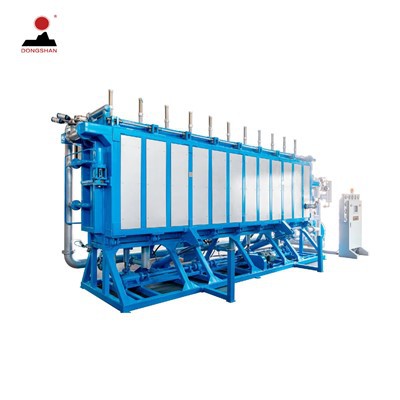
Hey there! I’m a supplier of EPS Block Molding Machines, and I’ve been in this business for quite a while. Over the years, I’ve seen firsthand how different factors can impact the quality of EPS blocks produced by these machines. So, I thought I’d share some insights on what those factors are. EPS Block Molding Machine
Raw Material Quality
Let’s start with the raw material, which is expandable polystyrene beads. The quality of these beads is super important. If the beads have inconsistent size, it can lead to uneven expansion during the molding process. For example, larger beads might not expand as well as smaller ones, resulting in a block with varying densities.
The bead’s expandability also matters. Some beads are designed to expand more than others. If you use beads with low expandability, you might end up with blocks that are too dense and don’t have the desired insulation properties. On the flip side, if the beads expand too much, the blocks can be too lightweight and lack structural integrity.
Another thing to consider is the purity of the beads. Contaminated beads can cause all sorts of problems. They might not expand properly, or they could leave impurities in the final block, affecting its overall quality. So, it’s crucial to source high – quality, pure expandable polystyrene beads from reliable suppliers.
Machine Settings
The settings of the EPS Block Molding Machine play a huge role in the quality of the blocks. Temperature is one of the key factors. The heating temperature needs to be just right. If it’s too low, the beads won’t expand fully, and the block will be under – formed. If it’s too high, the beads can over – expand and even melt, leading to a block with a distorted shape and poor density distribution.
The pressure setting is also important. Adequate pressure is needed to ensure that the expanded beads are compacted together properly. If the pressure is too low, the beads won’t bond well, and the block will be weak. On the other hand, excessive pressure can crush the beads and damage the block’s structure.
The cycle time is another aspect. A shorter cycle time might seem like a good idea to increase production, but if it’s too short, the beads won’t have enough time to expand and bond correctly. A longer cycle time, while ensuring better quality, might reduce the overall production rate. So, finding the right balance is essential.
Molding Process
The way the molding process is carried out can have a big impact on the block quality. The pre – expansion step is crucial. During pre – expansion, the beads are heated and allowed to expand to a certain size. If this step is not done correctly, the beads won’t be in the right state for the final molding. For example, if the pre – expansion is too rapid, the beads might not expand uniformly, which will affect the final block’s quality.
The filling of the mold is also important. The beads need to be distributed evenly in the mold. If there are areas where the beads are more concentrated or less concentrated, it will result in a block with uneven density. This can lead to problems like warping or poor insulation in those areas.
After the beads are filled in the mold, the steam injection process is used to further expand and bond the beads. The steam needs to be injected evenly and at the right pressure and temperature. If the steam distribution is uneven, some parts of the block might not be properly formed.
Operator Skill
The skill of the operator running the EPS Block Molding Machine can’t be underestimated. An experienced operator knows how to adjust the machine settings based on the raw material characteristics and the desired block quality. They can detect problems early in the process, such as irregular bead expansion or mold filling issues.
For example, an operator might notice that the beads are expanding too slowly and adjust the heating temperature accordingly. Or, they can see that the mold is not being filled evenly and make the necessary changes to the filling mechanism. On the other hand, an inexperienced operator might not be able to identify these issues, leading to a lot of defective blocks.
Environmental Conditions
Environmental conditions can also affect the quality of EPS blocks. Humidity is one factor. High humidity can make the expandable polystyrene beads absorb moisture, which can interfere with the expansion process. The beads might not expand as well, or they could form clumps, resulting in a block with poor quality.
Temperature in the production environment is also important. If the ambient temperature is too low, the machine might take longer to heat up the beads, and the overall molding process could be affected. If it’s too high, it can cause the beads to expand too quickly, leading to uneven block formation.
Maintenance of the Machine
Regular maintenance of the EPS Block Molding Machine is vital for producing high – quality blocks. If the machine’s components are worn out or not functioning properly, it can lead to all sorts of problems. For example, a malfunctioning heating element might not heat the beads evenly, resulting in inconsistent block density.
The mold also needs to be maintained. Over time, the mold can get dirty or damaged. A dirty mold can leave marks on the blocks, and a damaged mold can cause the blocks to have an incorrect shape. So, cleaning and inspecting the machine and the mold regularly is a must.
Quality Control Measures
Implementing proper quality control measures is essential. This includes inspecting the raw materials before use to ensure their quality. During the production process, samples of the blocks should be taken at regular intervals and tested for density, strength, and insulation properties.
If any defective blocks are found, the production process should be stopped immediately to identify and fix the problem. This might involve adjusting the machine settings, changing the raw material supplier, or providing additional training to the operator.
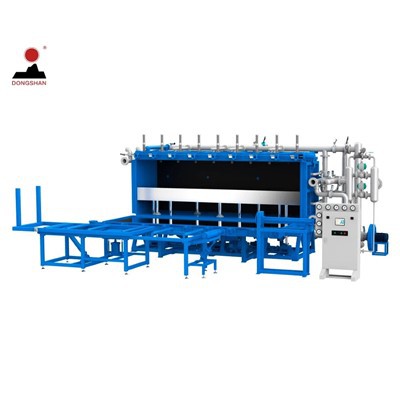
Well, there you have it! These are the main factors that can affect the quality of EPS blocks produced by an EPS Block Molding Machine. As a supplier, I always make sure to provide my customers with machines that are easy to operate and maintain. And I’m always ready to offer advice on how to optimize the production process to get the best – quality blocks.
EPS Pre-expander If you’re in the market for an EPS Block Molding Machine or have any questions about improving the quality of your EPS block production, don’t hesitate to reach out. I’d be more than happy to have a chat with you and discuss how we can work together to meet your needs.
References
- "EPS Production Technology Handbook", Industry Press
- "Materials Science for Polymer – Based Products", Academic Publishers
Hangzhou Fuyang Dongshan Plastic Machinery Co., Ltd.
Hangzhou Fuyang Dongshan Plastic Machinery Co., Ltd. is one of the most professional EPS block molding machine manufacturers and suppliers in China, featured by quality products and low price. Please feel free to wholesale advanced EPS block molding machine made in China here and get quotation from our factory. Customized orders are welcome.
Address: 101 Guanting, Baiqian Villige, Luzhu Town, Fuyang District, Hangzhou City, Zhejiang Province, China
E-mail: xu@dong-shan.cn
WebSite: https://www.epseppmachinery.com/
